
August 6: A Historic Day for Bolivia
Every August 6, Bolivia celebrates its Independence Day but in 2025, this date holds extra meaning—Bolivia turns 200 years old as a republic!
The Road to Freedom
Bolivia’s independence was part of a larger Latin American movement to break free from Spanish colonial rule. At the time, Bolivia was part of the Viceroyalty of Peru. Two key events sparked the flame of liberation:
The Cry for Freedom in Chuquisaca – May 25, 1809
In today’s Sucre, Creoles (descendants of Spaniards born in the Americas) launched a revolution demanding self-rule. Although suppressed, this uprising laid the foundation for future independence efforts.
The Cry for Freedom in La Paz – July 16, 1809
Just weeks later, La Paz also rose up against Spanish control. Though also crushed, these two revolts marked the beginning of 16 years of struggle for independence.
August 6, 1825: The Republic of Bolivia Is Born
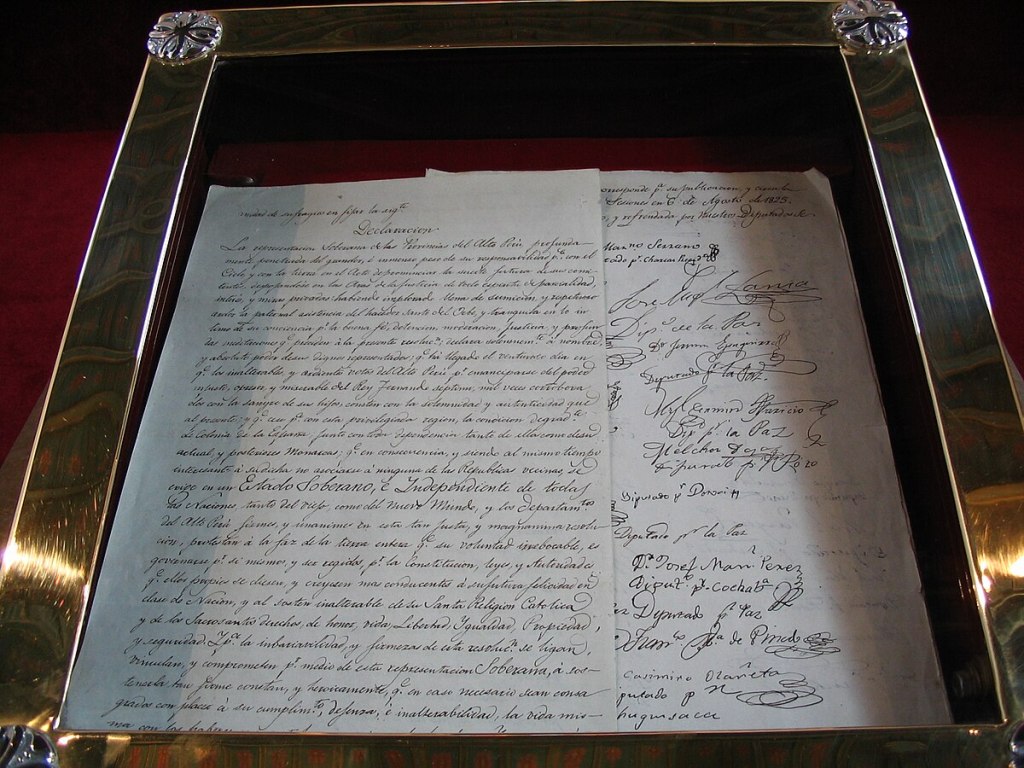
After more than a decade of conflict, Bolivia officially declared its independence on August 6, 1825. The declaration took place at the House of Liberty in Sucre, led by José Mariano Serrano during a national assembly.
The date was chosen to coincide with the first anniversary of the Battle of Junín, a major victory by Simón Bolívar in Peru.
Did You Know Bolivia Almost Had a Different Name?
After independence, there was debate over what to call the new country. Options included “Republic of Upper Peru” and “Republic of Bolívar”, in honor of the Liberator. But everything changed thanks to a now-famous phrase by the representative from Potosí, Manuel Martín Cruz:
“If from Romulus comes Rome, then from Bolívar shall come Bolivia.”
This phrase won over the assembly, and on October 3, 1825, the country was officially named Bolivia. Bolívar hadn’t asked for that honor, but in a letter, he called it “the greatest honor” he had ever received.
Bolívar and Sucre: Founding Fathers of Bolivia
Simón Bolívar was appointed Lifelong President and “Protector” of the new republic. However, he soon stepped down and handed power on December 29, 1825, to his comrade-in-arms, Marshal Antonio José de Sucre, who helped organize the Bolivian state.
Later, on May 18, 1826, Peru officially recognized Bolivia’s independence through a decree signed by Bolívar in Lima.
August 6 is not just another date on the calendar—it represents 200 years of resilience, pride, and national identity. Bolivia is one of the few countries in the world named after its liberator, and its road to independence is a story worth telling—and celebrating.

 All Things Bolivia